Cracked Driveway? Top Five Reasons Why Your New Concrete Driveway Cracked
Cracked Driveway? Here we explore some of the top reasons why your new driveway may have cracked. Discover common issues that can be avoided when pouring concrete helping to minimize surface cracks in your finished project.
CONCRETE
1/7/20263 min read
Understanding Concrete Cracks
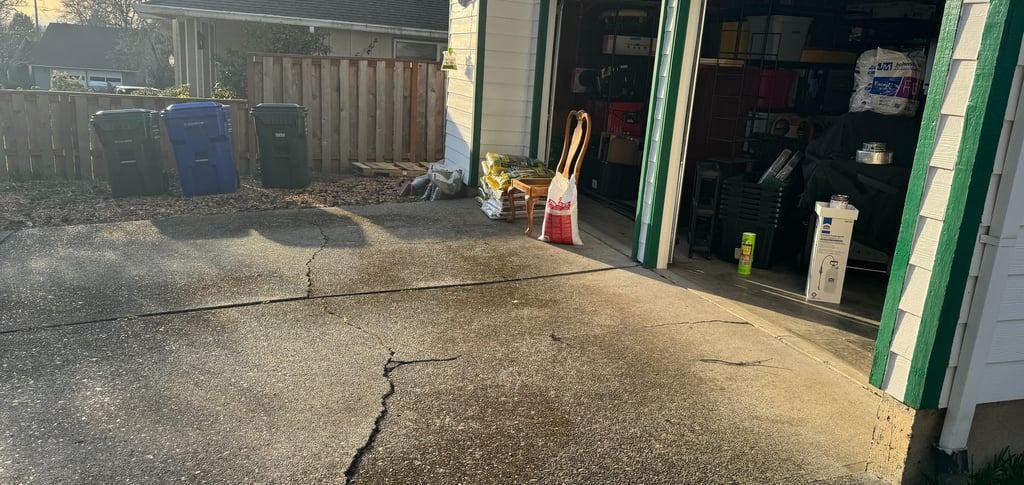
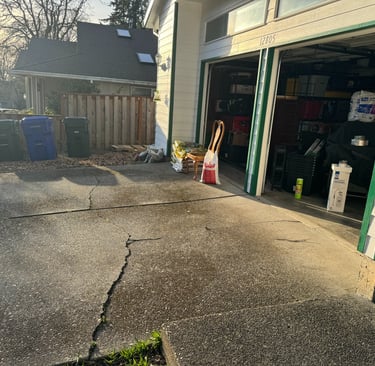
Cracks in a newly poured concrete driveway can be frustrating for homeowners and when installed properly can be mostly avoided. In Oregon, where weather conditions can be unpredictable, it’s important to understand why these cracks occur and the significance of hiring a licensed, bonded, and insured contractor to prevent them.
Reason One: Improper Mixing
One of the primary reasons your new concrete driveway may crack is due to improper mixing. Concrete must have the right balance of cement, sand, gravel, and water. If this balance is off, it may weaken the structure and make it more susceptible to cracking. A lot of contractors prefer to add extra water to their concrete to increase slump or workability. While increasing slump (adding water) to 6 inch or 7 inch slump does make the concrete more workable and easier for finishers it can also significantly decrease your finished concrete strength.
Reason Two: Insufficient Curing Time
Curing is a vital process that allows concrete to set and gain strength. This process is also known as hydration. Hydration is the ongoing chemical reaction that occurs between cement and water giving concrete its strength. If your cement does not have proper hydration it can result in cracks and durability issues. If your contractor does not understand the importance in the curing process they may rush this process, your driveway could crack under pressure from vehicle loads or environmental elements. A licensed contractor understands the correct curing period and ensures that your driveway is given ample time to set properly. Concrete technically cures for about 28 days. Ensuring your concrete is properly hydrated throughout the first seven days in instrumental in avoiding cracks. Your concretes overall strength is also dependent on the curing process. Your concrete reaches about 70-75% of its final strength with in the first seven days. At 14 days your concrete will reach 90% of its final strength. And to reach 100% of your concretes final strength will take typically 28 days.
Reason Three: Temperature Fluctuations
Oregon’s changing weather can lead to temperature fluctuations that affect concrete. Extreme cold or heat can cause the concrete to expand or contract, leading to cracks. A professional contractor takes these factors into consideration, choosing the right materials and methods to accommodate temperature changes. Be sure that your hired contractor implements proper control joints helping to minimize stress due to natural shrinkage and movement that concrete endures. Control joints are strategically placed grooves or separations in concrete, designed to manager cracking caused by expansion. Your contractor should also leave you detailed instructions on how to keep your concrete properly hydrated, particularly in the first seven days.
Reason Four: Poor Sub-base Preparation
The foundation of your driveway is crucial. If the sub-base is not properly compacted or graded, it can lead to settling and cracking over time. A reputable contractor will ensure that your driveway's foundation is stable, preventing future problems. Unfortunately, there are a lot of contractors out there who look to save on time, labor and overall project costs by speeding through this important process. Proper removal of soft soil, organic materials such as grass, bark dust, and tree roots is critical. Your contractor should be compacting the soil properly before adding at least 2 inches of gravel and then compacting it a second time to ensure proper sub-base preparation. New driveway installations may require up to 8 inches of new gravel.
Reason Five: Heavy Loads
Lastly, exceeding the weight limits for your driveway can lead to cracking. Parking heavy vehicles or placing heavy equipment on a new driveway before it’s fully cured can create stress fractures. A licensed contractor will provide recommendations on appropriate weight limits based on your driveway's specifications. The appropriate PSI for the job should be determined by your contractor. The thickness of your concrete as well as proper reinforcement should be utilized when planning on parking SUVs or heavy trucks on it.
Importance of Hiring a Licensed, Bonded, and Insured Contractor
Hiring a contractor who is licensed, bonded, and insured is essential for protecting your investment in Oregon. A licensed contractor possesses the necessary skills and knowledge to ensure proper installation techniques that prevent cracking. Being bonded means that the contractor has met certain standards and provides assurance against any potential job mishaps. Lastly, insurance protects you from liabilities if accidents or damages occur during the construction process. Engaging a qualified contractor significantly reduces the risk of future issues, saving you time and money in the long run. There are a lot of unlicensed concrete folks running around out there. It may seem like a good idea to save 2k-3k up front but choosing to hire unlicensed contractors often ends up with the homeowner paying a licensed contractor to come back and fix or redo the mistakes leading to costs that far exceed hiring a professional in the first place.
In conclusion, understanding the reasons behind driveway cracking and hiring a qualified contractor are crucial steps in protecting your investment. Ensure that your new concrete driveway stands the test of time by doing your due diligence in choosing the right professional for the job.
East 2 West Concrete
Reliable concrete services with a personal touch
Email us: East2Westconcretepros@gmail.com
Call us: 503-821-9715
info@east2westconcrete.com
© 2025. All rights reserved.